Documentation
 Terrace configurator
 E-catalog
 Stores
 Contact


See the variations
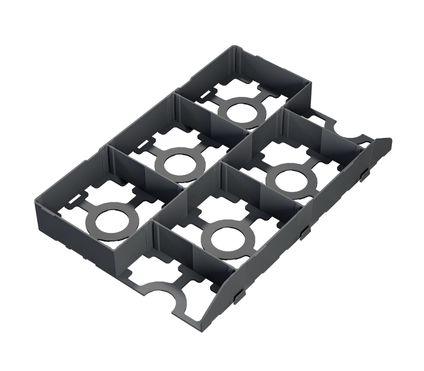
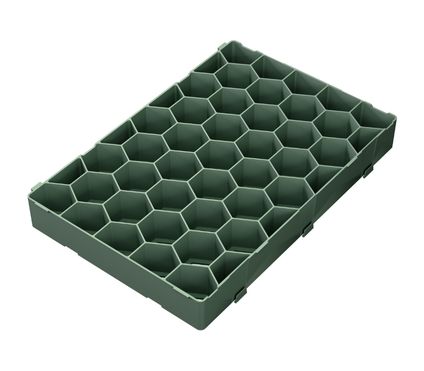
URBANIT Paving Blocks 6 Tiles Right Laying

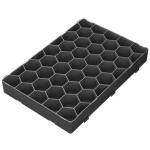


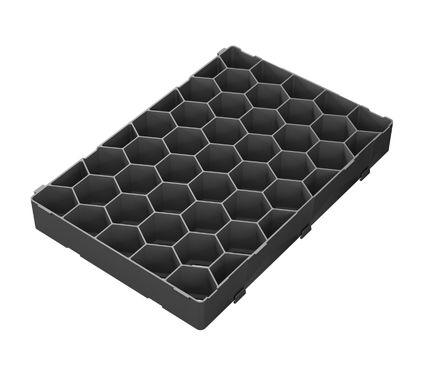

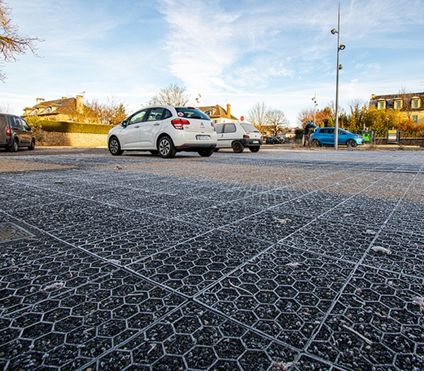

Interlocking system to ensure maximum stability of adjoining modules.

The structure of the pavers has the ability to absorb the effects of expansion, preventing them from lifting.
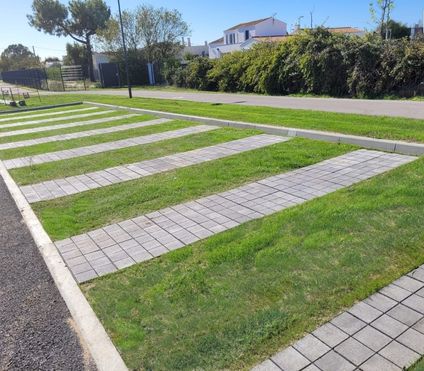
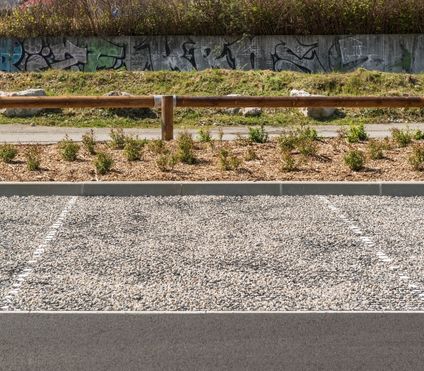
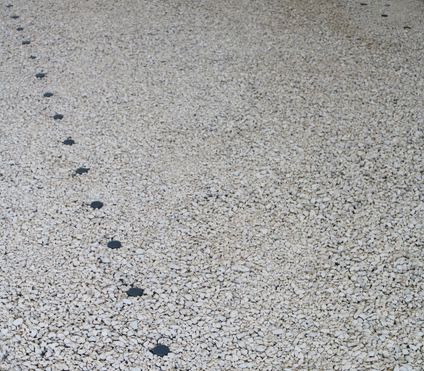
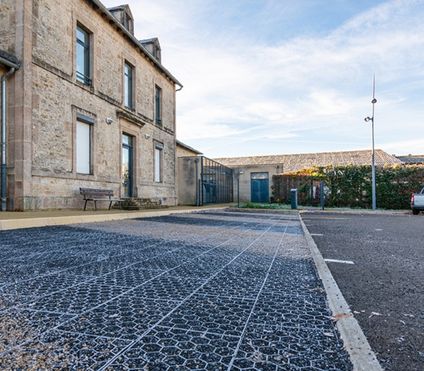
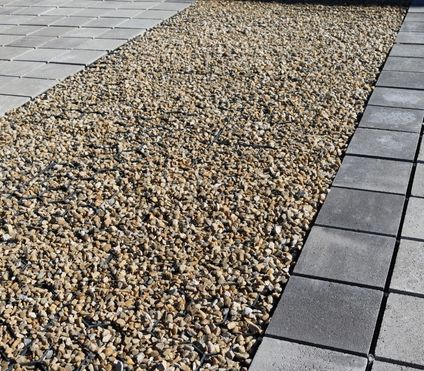
Polyolefin module to fill with aggregate. Use this product to create water-permeable car parks, access roads, footpaths, etc. URBANIT® modules are easy to lay and bring creativity to urban space design with the opportunity to create a combination of finishes.
 Made in France.
 Warranty 10 years.
 Iso9001
 Iso14001
 label MORE.
 Information sorting
 Recycled material.
 FDES
FDES
 Optimal and natural drainage of rainwater.
 Quick and easy to lay.

Allows the construction of permeable parking areas for light vehicles with frequent use (condominiums, businesses, office buildings, carpooling areas, etc.), pedestrian walkways, cycle paths, etc. / the delineation of parking spaces (disabled parking bays, electric vehicle spaces, etc.) and traffic circulation areas, in combination with URBANIT® pavers.
Can be used for vehicle traffic with an axle load of up to 20 tonnes and for fire access roads.
Provides accessibility for persons with reduced mobility in accordance with the recommendations of the decree of 20 April 2017 and our installation requirements.
Do not use with hot-mix asphalt.
Can be cut using an angle grinder. Empty grids may be driven on to facilitate gravel unloading.
Installation on slopes up to 2%.
The Urbanit® gravel grid is not designed for intensive traffic by light or heavy vehicles.
The use of a gravel stabilisation grid is essential to avoid the creation of ruts by repeated use of vehicles entering and leaving a garage, for example.
Our recommendation is to fill the honeycomb tiles with crushed gravel graded to between 5 mm (min.) and 10 mm (max.).
The geotextile membrane separates the distinct sub-layers of the soil.. This makes it possible to separate sand from aggregate, for example. The geotextile membrane also prevents weeds from growing in the gaps between the gravel.


of existence at your service

to bad weather

and environmentally friendly

thanks to our innovative systems

Jouplast® guides you in your outdoor development project (terrace, staircase, driveway) by establishing a complete shopping list in 5 minutes.
Also benefit from expert advice to install your project with complete peace of mind.
You will find here all our directions for use.
Find the point of sale closest to you using our dealer map. We remind you that no products are sold directly. Please contact one of our distributors if you wish to receive a quote or make a purchase.
Our products are installed by numerous landscapers or public works companies. We encourage you to contact one of these professionals for the installation of Jouplast® products.
If you need assistance or information, you can reach out to your distributor.
Thank you!
To find the price of your Jouplast® product, we invite you to contact your nearest distributor.
We do not sell directly to individuals or professionals.
To find a price, we recommend contacting your usual distributor.
If your product is defective, we invite you to contact your distributor.
If the response from your distributor is not satisfactory, please feel free to write to us using the contact form.
In the case of receiving slightly deformed or warped pads, we assure you that they remain suitable for installation. Once the covering is installed, the pad will return to its original shape.