 Documentation
 Terrace configurator
 E-catalog
 Stores
 Contact


See the variations
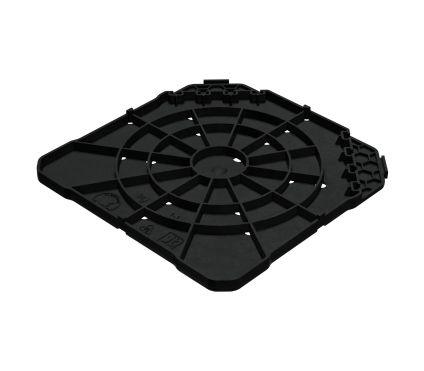
Decking Riser Pedestal (1 Lug) “Essential Range”

Our Essentiel, Elevo® and Easio® pedestals for natural timber decking are easy to use and cost-effective. To ensure the durability of your raised decking, the joists should never be laid directly on the ground. For proper ventilation, timber decking boards should be supported on joist pedestals. This is why Jouplast® offers such a broad range of pedestals for elevated wooden decks, complemented by an equally extensive range of associated accessories to maximise the life of your wooden terrace. Use one of our decking cover tapes to protect joists from moisture, or Fixego®, a hidden-decking fixing system for wooden decking boards. To complete this range, discover Profildeck®, a self-supporting structure that allows you to create raised decking or even mix different materials.
Read more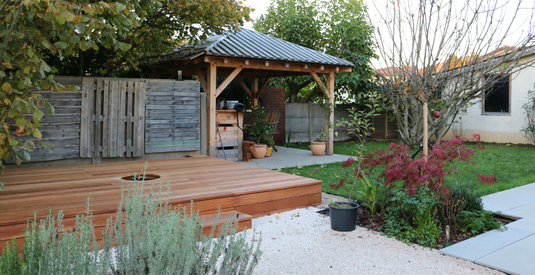
32 results






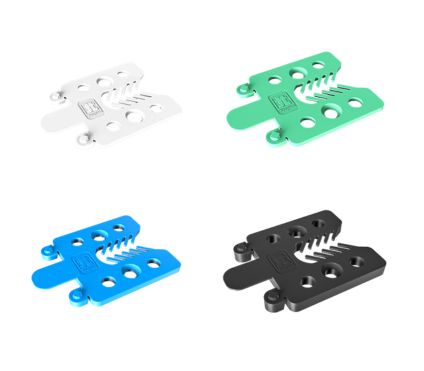




There is nothing quite like a wooden deck to bring a warm, welcoming atmosphere and enhance your outdoor space. A wooden deck terrace offers a natural and unique look thanks to the individual character of each wooden decking board. With a wide range of wood species available, you can create a space perfectly aligned with your budget and your taste. Beyond its aesthetic appeal, wood is a very robust and anti-slip material. Easy to maintain with just a few simple steps, your wooden terrace will withstand the bad weather.
Before you start building your elevated deck, it is important to consider your project as a whole. Although installing timber decking on JOUPLAST® pedestals or shims is straightforward, we recommend following our tips to ensure your raised decking area lasts for years to come. Ready? Let’s get started!
Make sure the key aspects of your landscaping project have been clearly defined before starting any construction work.
First: pick your installation method. Whether you choose single joists, cross joisting, double joisting or double cross joisting will be crucial for calculating the amount of material you will need to build your garden decking. To visualise these different installation techniques and learn about their benefits, you can consult our comprehensive guides or use our app.
Also consider the direction in which you plan on laying your decking boards; they should be laid parallel to the wall that contains the doorway to access the patio.
Do not overlook the slope of your elevated wooden deck. We recommend a slope of 1 cm per linear metre to facilitate drainage and water runoff.
Finally, choose your decking boards and joists carefully. It is essential to use joists made from the same type of wood as the decking boards, or of a higher grade. The structure of a deck laid on adjustable pedestals must be constructed using wooden or aluminium joists, not composite ones, in order to prevent expansion. We advise you to contact your timber supplier to be advised on this matter.
Keep in mind that you must comply with your local building regulations. We strongly recommend that you draw up a joint layout plan and carefully calculate the height between the floor and the decking beforehand.
Before installing any patio pedestals, it is important to stabilise the ground beneath them to ensure the longevity of the raised decking area. To establish a solid base, the ground must be levelled, even and free of any obstacles.
On a concrete slab, ensure you remove any debris that could hinder the installation and/or stability of the pedestals.
On unprepared ground, minor earthworks will be required. First, you will need to excavate the ground to create a level base and ensure the ground is properly levelled. The installation of a geotextile membrane and the creation of a base layer made of crushed stones are then essential to ensure that the pedestals can be installed correctly.
If you are using Elevo® pedestals, ground preparation is minimal and simply requires the installation of a geotextile membrane to ensure that rainwater properly drains.
Jouplast offers several solutions for building a raised decking on pedestals. You can use the Essentiel joist pedestal or our EASIO® self-levelling pedestal. For a deck on metal posts, choose the Elevo® pedestals. Finally, our Profildeck® aluminium joists ensure stability whilst also allowing you to mix and match the materials used for your decking.
Our adjustable pedestals are available in heights ranging from 10 mm to 230 mm and should be chosen according to the desired decking height. Installing your raised timber decking on pedestals does not require fixing the pedestals or use any glue or deck screws. You can also combine your pedestals with risers to increase their height if needed. It is possible to place an isolation pad under the pedestals to make them slip-resistant. Adding this pad is strongly recommended to prevent the pedestals from moving on the ground.
When installing the pedestals, bear in mind that the spacing between them must be even. We generally recommend 70 cm, to be adjusted according to the choice of joists and type of wood you are using. Also ensure that your pedestals are properly aligned.
If you wish to hide cables, now is the time! Installation on pedestals is perfect for this.
Installing the joists is a crucial step. The quality of this structure will play a crucial part in the longevity of your raised decking. We therefore recommend choosing high-quality joists.
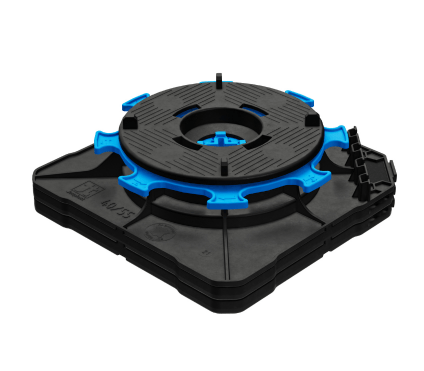
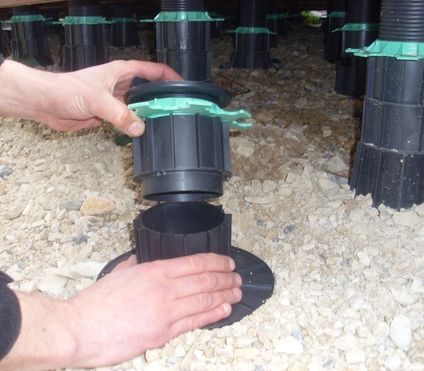
First, determine the correct centre-to-centre distance between each joist before installing them and securing them to the PVC pedestals with screws. You can then easily adjust the height of the pedestals by turning the green nut to the desired height starting with the riser pedestal situated at each end.
To protect your decking, it is essential to apply a protective cover tape to your joists. This step will prevent your decking structure from deteriorating due to moisture and run-off water.
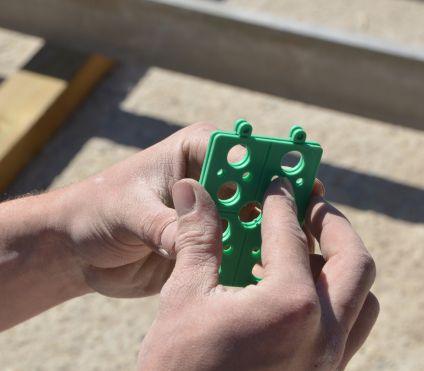
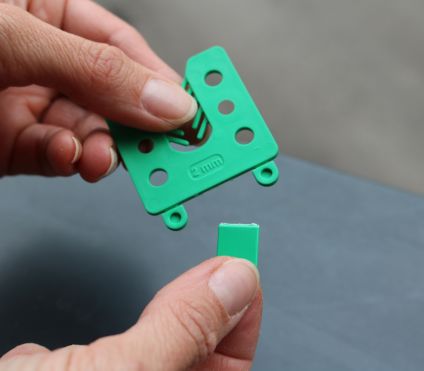
Lay the wooden decking boards leaving a 5mm gap between each board. If necessary, you can use spacers.
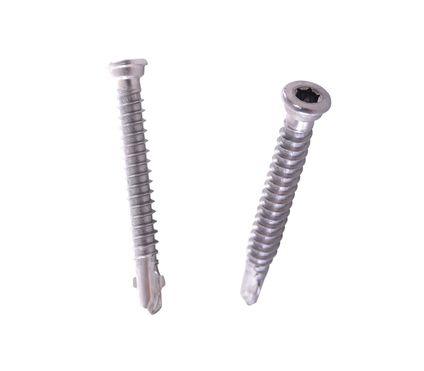
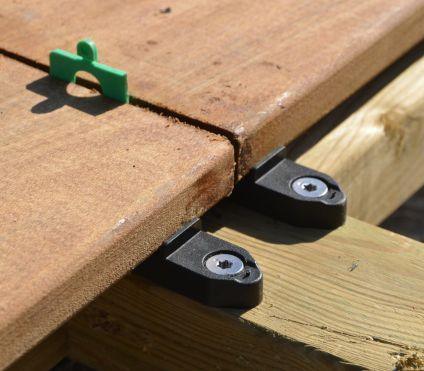
To secure your wooden boards, you can use screws or our Fixego hidden-decking system.
Do not forget to finish the edge of your raised decking. If its height allows it, you can also use our lateral riser support.
Once you have completed the installation of your raised decking area, remember to protect the wood following the recommendations provided by your timber supplier.
The cost of a raised timber decking depends on the area size, the flooring and the cost of labour. On average, you should expect to pay between £30 and £200 per m² for the installation of a raised timber decking, depending on the type of wood chosen and any ground levelling required. Timber decking patios can be more affordable than paved patios, but you must however consider the long-term maintenance costs.
It is important to protect the wood from the elements, UV rays, temperature fluctuations and insects. There are many protective products available, such as varnishes, wood oils, water-repellent treatments and wood sealants. However, each type of wood requires a specific treatment.
Whether you have chosen softwood or exotic wood, we recommend seeking advice from the manufacturer of the decking boards to ensure you apply the correct products to your wooden floor terrace, guaranteeing the best possible result and durability.
Cleaning your raised decking regularly is also very important. If there are any stains, you can for instance use a little soapy water (mild soap solution) and a scrubbing brush. This cleaning method should be adapted to suit the type of wood of your timber deck.
Before you start building your patio, it is important to check that you have the necessary permits.
If you own the property, that your patio is less than 20m² and is not raised, or only slightly raised, you will usually not need a planning application. However, for a terrace larger than 20m² or raised (generally from 40cm upwards), an authorization will be required (depending on your circumstances).
For additional information, we advise you to contact your local council directly.
If you are a leaseholder, do not forget to seek permission from your property manager.
The most commonly used natural woods for decks are pine, larch and teak. These woods are weather- and insect-resistant. However, many people are torn between choosing a softwood or a hardwood. Which wood is the best between the two for an outdoor patio? The answer depends on your priorities.
To choose the best wood for your project, ask yourself these questions:
European woods, including many softwoods, have the advantage of generally being more affordable than exotic woods. If the environmental impact of your project is important to you, you might want to opt for a European wood. Exotic wood, on the other hand, is generally more expensive but offers greater durability.
As you can see, every type of wood has its pros and cons. Do not hesitate to discuss this with your supplier, who will be able to guide you towards the best choice based on your aesthetic, financial and environmental criteria…
The height of your elevated wooden deck will depend on the available clearance space (between the ground and the glass door thresholds of your house, for example).
To calculate the height of the pedestals to use, it is important to take into account:
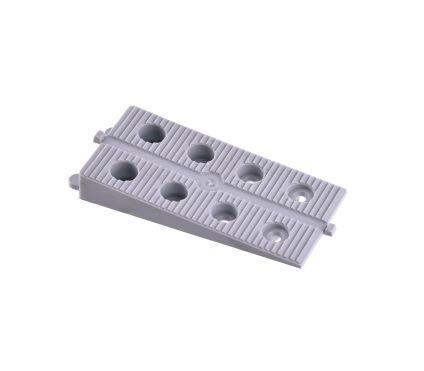
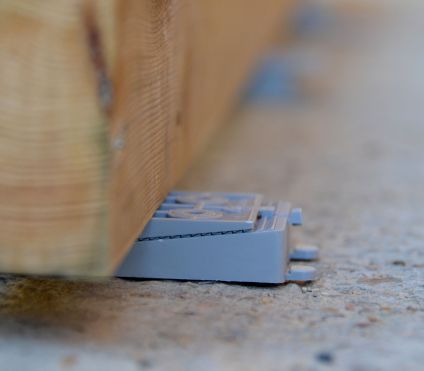
Then, you simply need to subtract all these heights from your clearance height to determine the space you have left and thus choose the correct pedestal height. If the pedestals are still too high, you can lay your decking on shims. The most important thing is not to lay your joists directly on the ground, as these could become damaged very quickly.
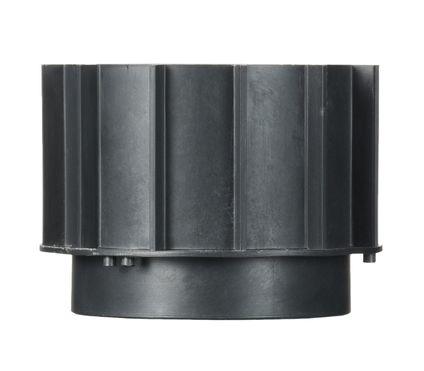
We now offer a wide range to suit all your needs, from 8mm to 230mm and beyond, by adding risers to your Jouplast® PVC pedestals.
The spacing between the pedestals will depend on the type of wood and the cross-section of the joists you are using. As a general rule, we recommend a distance of 70 cm between each adjustable pedestal. For joists, we recommend a centre-to-centre distance of 50 cm if your decking is made of natural wood boards. Please note that these guidelines differ for a composite decking.
There are several methods for concealing the joist pedestals on your raised decking.
If the clearance height allows it, you can create wooden side finishes for a uniform look.
For a finish at the end of the joist, simply place a lateral riser support on the base of the joist pedestal and snap off the tab. You can then more easily position and secure the joists. Do not forget to secure the vertical joist with a screw. You can finally attach the fascia board to the joist using 2 screws.
For a finish along the joist, you have two options:
If your clearance height is too low, do not worry! We have alternatives to offer:
Jouplast® pedestals have a crush resistance of over 1 tonne. However, the weight that an elevated wooden deck on pedestals can support does not depend solely on the strength of the pedestals.
Each type of wood has its own strength. We therefore advise you to consult your timber supplier for more precise information on this.
More generally, if you are planning to place a heavy item on your deck on pedestals, such as a hot tub or a pergola for example, we recommend opting for our PROFILDECK® solution, which will better distribute the weight across the structure of the deck.
The best times to install a raised decking area are spring and autumn, as the temperatures are milder. However, installing a raised patio requires little ground preparation. It is therefore entirely possible to install it in the winter.
The lifespan of a wooden terrace depends largely on the quality of the substructure. That is why we advise you not to overlook this part, even though it is hidden from view. When building your raised timber decking, you must especially ensure that the weight is distributed evenly, that the substructure is well ventilated and protected from rainwater using a joist protection strip, and that the correct spacing between the boards is maintained, etc. All these details matter.
To ensure your deck has a long life, it is also important to maintain it regularly. To do this, remember to protect and clean it regularly. Take care of your wood, and it will repay you!


of existence at your service

to bad weather

and environmentally friendly

thanks to our innovative systems

Jouplast® guides you in your outdoor development project (terrace, staircase, driveway) by establishing a complete shopping list in 5 minutes.
Also benefit from expert advice to install your project with complete peace of mind.
You will find here all our directions for use.
Find the point of sale closest to you using our dealer map. We remind you that no products are sold directly. Please contact one of our distributors if you wish to receive a quote or make a purchase.
Our products are installed by numerous landscapers or public works companies. We encourage you to contact one of these professionals for the installation of Jouplast® products.
If you need assistance or information, you can reach out to your distributor.
Thank you!
To find the price of your Jouplast® product, we invite you to contact your nearest distributor.
We do not sell directly to individuals or professionals.
To find a price, we recommend contacting your usual distributor.
If your product is defective, we invite you to contact your distributor.
If the response from your distributor is not satisfactory, please feel free to write to us using the contact form.
In the case of receiving slightly deformed or warped pads, we assure you that they remain suitable for installation. Once the covering is installed, the pad will return to its original shape.


