 Documentation
 Terrace configurator
 E-catalog
 Stores
 Contact


See the variations
EASIO Self-Levelling Riser Pedestal for Decking

Self-levelling pedestals for outdoor patios provide support suitable for installation on a surface that is not perfectly flat or on an uneven surface. This means that the surface may have irregularities such as stones or gravel left over from site preparation and may have a slope of up to 5%. It may also be a concrete slab with some cracks caused by ageing. Whether you need a self-levelling paving pedestal for tiled surfaces or a self-levelling decking pedestal for timber builds, Jouplast® has a solution for you. Self-levelling patio pedestals are ideal for creating outdoor patio areas for pedestrian use, whether with ceramic tiles, paving, timber or composite deckings.
Read more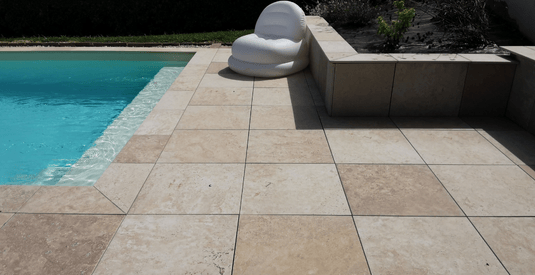
7 results


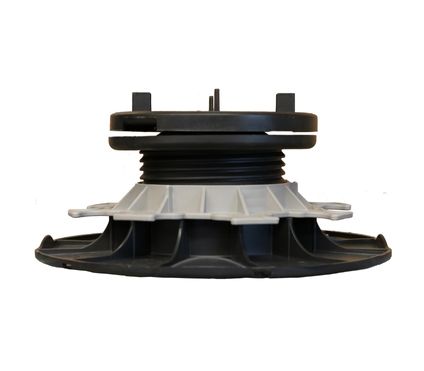

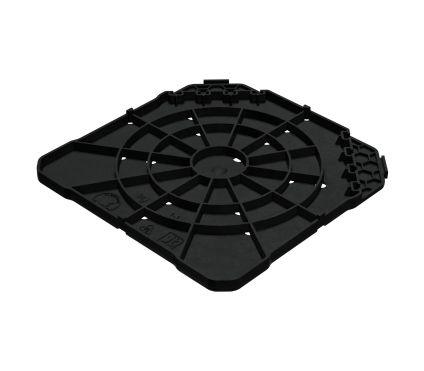
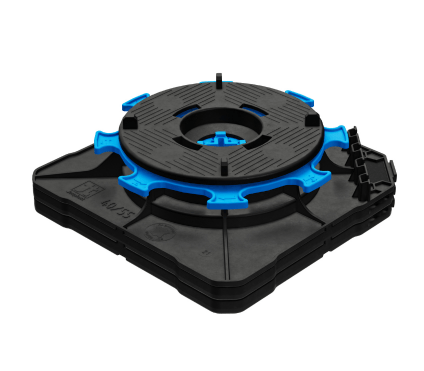
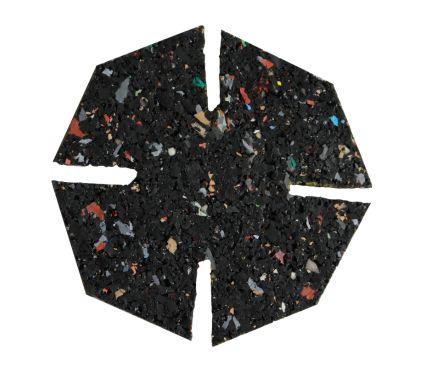


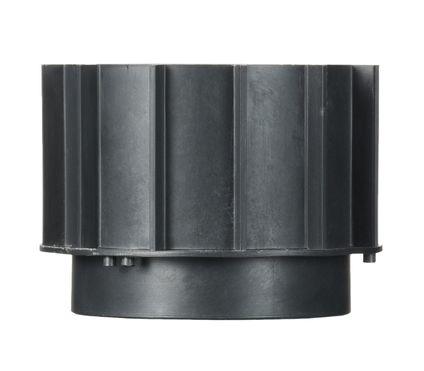
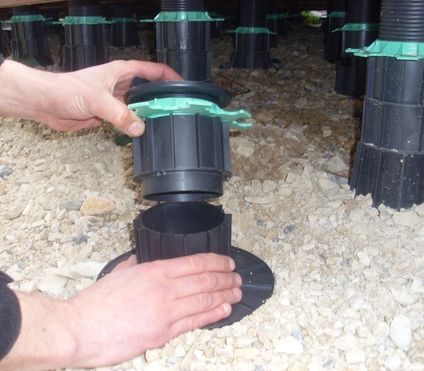
Jouplast offers three types of adjustable self-levelling patio pedestals for decking or tiles.
Our selection of self-levelling paving pedestals currently features two product ranges:
Additionally, we have recently added a new range of pedestals for raised deckings. Our EASIO® self-levelling decking pedestals were specifically designed for the construction of timber and composite deckings for pedestrian use.
Jouplast’s self-levelling patio pedestals offer several advantages for
Therefore, Jouplast self-levelling pedestals are a practical solution, guaranteeing time savings and unfailing adaptability thanks to their height adjustment.
First, mark out the location of the future patio.
Before starting the construction work, it is important, essential even, to prepare a joint layout plan in order to define: the direction of laying, the cuts, the number of pedestals, the edge finish, the accessories needed, etc.
Two possibilities:
For further explanations, you can watch our video on ground preparation.
Position the pedestals directly on the ground, following the layout plan and the spacing between the pedestals.
Lay the tiles against the spacers.
Turn the nut by hand to adjust the pedestal to the desired height.
*NB: The isolation pad raises the finished height by 3 mm.
**NB: For a non-adhesive installation, the tab can be left in place and used as a stop to hold the lateral riser support in position at the bottom.
Our self-levelling pedestals can be installed on uneven ground, as long as the ground has been properly prepared. They also work on existing concrete slabs, and it is very convenient to be able to install them against an existing structure without any difficulty.
Yes, it is essential to prepare the surface on which the pedestals will be installed. An unprepared surface (e.g. laying directly on soil or grass) may change over time and shift depending on the weight it bears and weather conditions (drought, heavy rain, etc.). This is why you must stabilise the ground to ensure the long-term durability of your project.
Our self-levelling pedestals are available exclusively for the slab and timber decking patios.
The number of pedestals you will need depends, of course, on the area to be covered and also on the size of your tiles / wooden boards:
Further details about the number of pedestals per m² based on the tile / decking boards dimensions and the patio area are available in our pedestals calculation table.
Yes, our self-levelling pedestals have an adjustable height to the nearest millimetre.
Our Essential pedestals have a height range of up to 485 mm when combined with risers. For the Cleman® range with dual adjustment, it is possible to adjust their height from 40 to 470 mm using a riser.
All our self-levelling patio pedestals can support up to 1 tonne per pedestal. Can you imagine? One tonne is the equivalent of a giraffe.
Jouplast self-levelling pedestals are durable and come with a 10-year warrantee, subject to our terms and conditions of sale and in accordance with our directions for use. They are UV rays and frost resistant and have a weight tolerance of up to 1 tonne per pedestal. This makes them a robust and stable support.


of existence at your service

to bad weather

and environmentally friendly

thanks to our innovative systems

Jouplast® guides you in your outdoor development project (terrace, staircase, driveway) by establishing a complete shopping list in 5 minutes.
Also benefit from expert advice to install your project with complete peace of mind.
You will find here all our directions for use.
Find the point of sale closest to you using our dealer map. We remind you that no products are sold directly. Please contact one of our distributors if you wish to receive a quote or make a purchase.
Our products are installed by numerous landscapers or public works companies. We encourage you to contact one of these professionals for the installation of Jouplast® products.
If you need assistance or information, you can reach out to your distributor.
Thank you!
To find the price of your Jouplast® product, we invite you to contact your nearest distributor.
We do not sell directly to individuals or professionals.
To find a price, we recommend contacting your usual distributor.
If your product is defective, we invite you to contact your distributor.
If the response from your distributor is not satisfactory, please feel free to write to us using the contact form.
In the case of receiving slightly deformed or warped pads, we assure you that they remain suitable for installation. Once the covering is installed, the pad will return to its original shape.


