 Documentation
 Terrace configurator
 E-catalog
 Stores
 Contact






See the variations
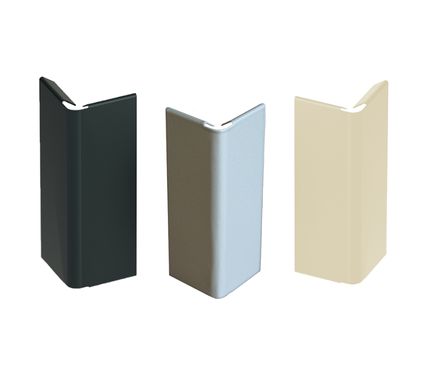
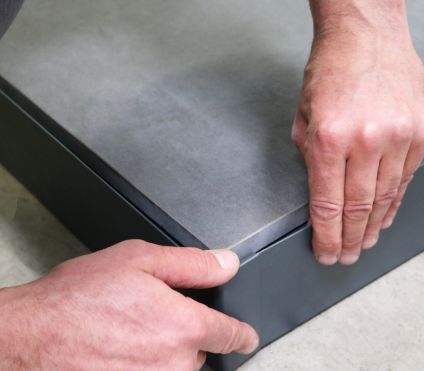
External Corner for Clip-on Finishing Profile

Whether your outdoor living space is to be paved in composite or natural timber decking or a combination of both, Jouplast® is THE partner for your raised patio or raised terrace. Our product ranges and accessories will provide you with everything you need. Our R&D team is constantly developing new products to meet the challenges of your outdoor landscaping projects: levelling without excavation, rot-proof structure, simplified height adjustment… Jouplast® guarantees you an aesthetically pleasing and durable patio.
Read more
64 results

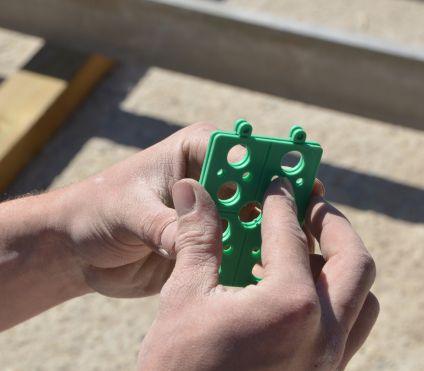
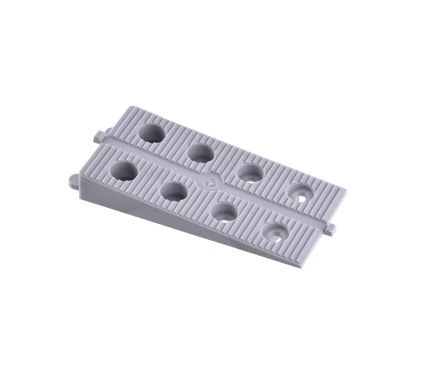
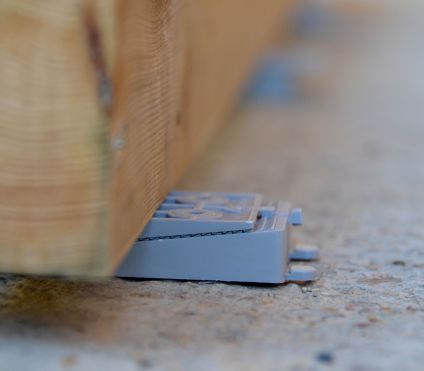




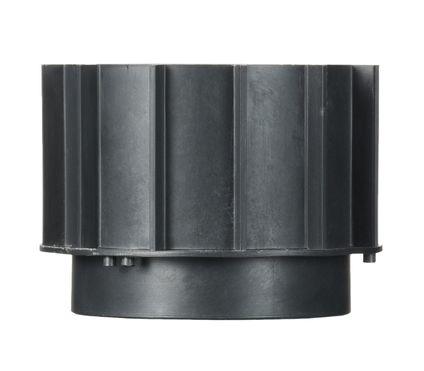
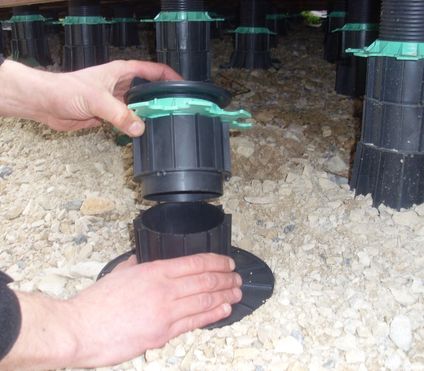
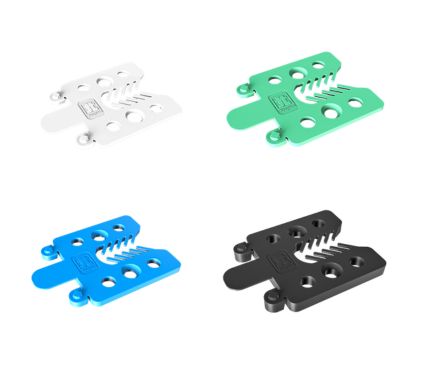
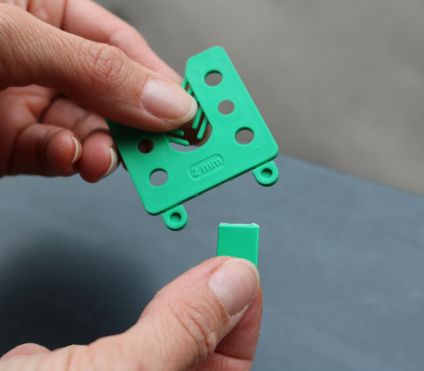




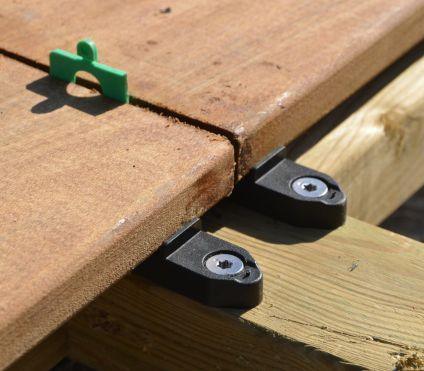
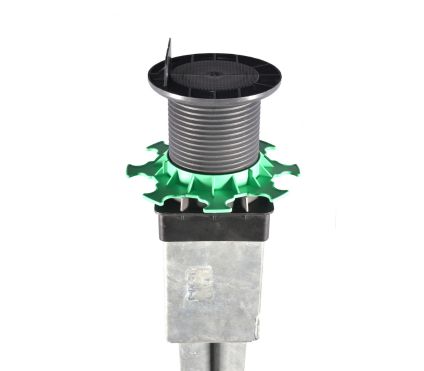
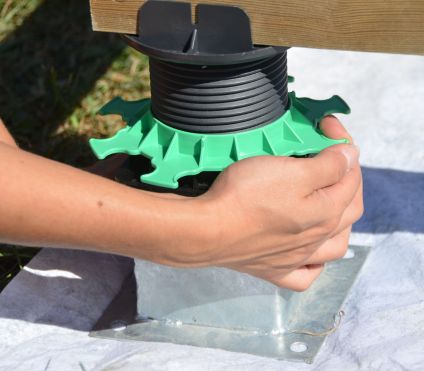
There are many advantages to using pedestals when building a raised patio: no need for joints, easy routing of pipes and cables, easy replacement of paving or decking, no need for major groundworks, etc.
Patios built on pedestals offer greater strength and durability than tiled patios laid using the “adhesive-bonded” method. This type of patio also makes it possible to mix materials, such as wood and travertine.
Building a raised patio offers many other advantages such as:
In short, a raised patio is a scalable, modern, reliable and efficient solution to enhance your outdoor space!
There are various options for creating raised patios:
For raised decking, our range includes the standard Essentiel pedestal, which requires ground preparation, and the Elevo® pedestal, which can be installed without levelling or ground stabilisation.
Our standard or Elevo® pedestals for raised composite decking are easy to use and cost-effective, delivering an aesthetic and natural finish.
To ensure your elevated composite deck remains durable and well-ventilated, wooden joists must rest on pedestals or spacers. Jouplast® offers a wide range of joist pedestals, as well as numerous related products to extend the lifespan of your composite decking patio.
Our pedestals pavers, composed of the Essentiel and the Cleman ranges, were designed for raised paved patios.
Our Cleman® range features 3 options to adjust the height of the pedestals:
Our step-by-step guides will tell you everything you need to know about the process of building raised patio on pedestals:
Whether you will need planning permission or not to create your raised terrace patio will depend, among other things, on the height, the surface, the type of patio you envision, and its location. We advise you to contact your city’s council before starting any construction work to check the local building codes that apply to your situation.
Must-have tools to build a raised patio on pedestals usually include:
Before installing any patio pedestals, it is important to stabilise the ground to ensure the longevity of your wooden deck or paved patio. To establish a solid base for your raised patio, the ground must be levelled, even and free of any obstacles.
On a concrete slab, ensure you remove any debris that could hinder the installation and/or stability of the pedestals.
On unprepared ground, minor earthworks will be required. First, you will need to excavate the ground to create a level base and ensure the ground is properly levelled. The installation of a geotextile membrane and the creation of a base layer made of crushed stones are then essential to ensure that the patio pedestals can be installed correctly.
If installing on a waterproof surface, comply with DTU 43.1.
If you are using Elevo® pedestals, ground preparation is minimal and simply requires the installation of a geotextile membrane to ensure proper drainage of rainwater.
A base layer composed of 0/31.5 crushed stone must be laid to level the ground. This must then be compacted using a vibratory plate compactor.
Depending on the nature of the soil, a draining foundation layer can be laid using 30/60 or 40/80 crushed stone.
If the resulting surface is still uneven, we recommend laying a bed using quarry sand or 0/4 crushed sand. This will make it easier to install low profile pedestals.
We recommend using the vibratory plate compactor between each layer.
You can watch our video on ground preparation.
The finishing touches on a raised patio are essential to ensure your patio looks neat and finished.
There are several options to finish the edges of your raised patio:
The advantage of raised patio built on pedestals is precisely that this installation requires neither adhesive nor screws. The pedestals do not need to be fixed the ground. You can dismantle the deck in no time at all and without damaging the ground.
However, for wooden decks, it is necessary to fix the joists to the pedestals in order to secure the whole structure. Subsequently, the decking boards must be fixed to the joists using through-bolts or hidden-decking fixings such as Fixego®.
The main constraint when building a raised patio is to leave enough space under construction to install all the necessary accessories.
Our advice is to leave a minimum clearance of 3 cm under the patio slab.
NB: If the slab has a slope, use self-levelling pedestals, which will compensate for up to 5%. The same applies if the surface of the slab is uneven.
Our patio pedestals have a crush resistance of over 1 tonne. However, the weight that a wooden or paved patio can support does not depend solely on the strength of the pedestals.
Each type of flooring has its own load-bearing capacity. We therefore advise you to check with your timber or paver supplier for more precise information.
More generally, if you are planning to place a heavy item on your raised garden terrace, such as a hot tub, we recommend opting for our PROFILDECK® solution (aluminium joists), which will ensure better weight distribution across the structure of the raised patio.
Our paver or timber decking pedestals come with a 10-year guarantee, based on our terms and conditions of sale and our installation guidelines. Furthermore, we have never been aware of any deterioration in the pedestals over time.
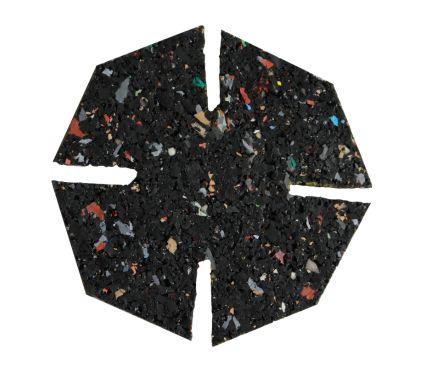
On another note, when walking on a raised patio, you may feel a slight sliding or clicking sensation. To remedy this, we strongly recommend using our isolation pad, to be placed on the paving slabs, as well as our rubber cushions, to be placed on each pedestal head. These two products, made from recycled tyres, cushion movement on the patio and reduce noise and resonance.
To find out more, please take a look at our products: the isolation pad and the rubber cushion.
Building a raised patio on pedestals has many advantages, but it is also important to be aware of a few cons – or rather, constraints:
Surfaces such as concrete slabs, ceramic tiles, exotic wood or imitation wood decking will cost the same whether for a raised patio or a traditional patio laid with mortar, glued or screwed down.
The cost of the patio pedestals is an additional factor compared to a traditional installation. However, they are versatile and easy enough to use to offset the cost of having a traditional patio installed by a professional landscaper. Thus, in just one day and with a single person, it is possible to build a raised patio on pedestals of approximately 20m².


of existence at your service

to bad weather

and environmentally friendly

thanks to our innovative systems

Jouplast® guides you in your outdoor development project (terrace, staircase, driveway) by establishing a complete shopping list in 5 minutes.
Also benefit from expert advice to install your project with complete peace of mind.
You will find here all our directions for use.
Find the point of sale closest to you using our dealer map. We remind you that no products are sold directly. Please contact one of our distributors if you wish to receive a quote or make a purchase.
Our products are installed by numerous landscapers or public works companies. We encourage you to contact one of these professionals for the installation of Jouplast® products.
If you need assistance or information, you can reach out to your distributor.
Thank you!
To find the price of your Jouplast® product, we invite you to contact your nearest distributor.
We do not sell directly to individuals or professionals.
To find a price, we recommend contacting your usual distributor.
If your product is defective, we invite you to contact your distributor.
If the response from your distributor is not satisfactory, please feel free to write to us using the contact form.
In the case of receiving slightly deformed or warped pads, we assure you that they remain suitable for installation. Once the covering is installed, the pad will return to its original shape.


