 Documentation
 Terrace configurator
 E-catalog
 Stores
 Contact


See the variations
Decking Riser Pedestal (1 Lug) “Essential Range”

Our Essentiel, Elevo® and Easio® adjustable decking pedestals are easy to use and cost-effective. To ensure a durable raised decking, the joists should never be laid directly on the ground. For proper ventilation and water drainage, timber decking boards should be supported on pedestals or packers. This is why Jouplast® offers such a broad range of adjustable pedestals for decking, complemented by an equally extensive range of accessories to maximise the life of your natural timber decking. Whether you are looking for a standard decking pedestal system for a flat surface or a self-levelling solution for sloped ground, Jouplast® has the right deck pedestals for your project.
Read more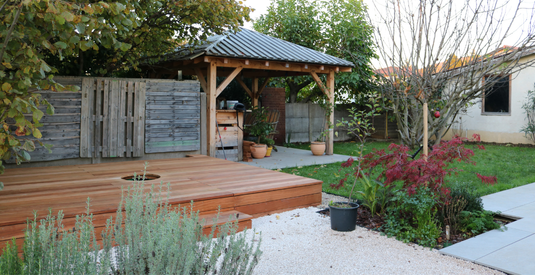
27 results


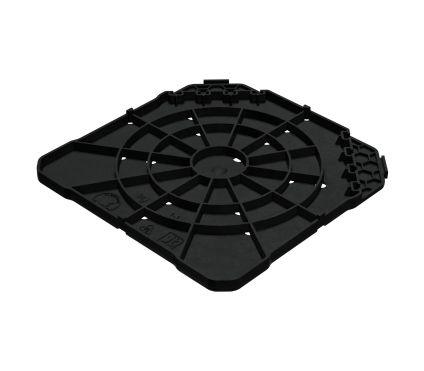
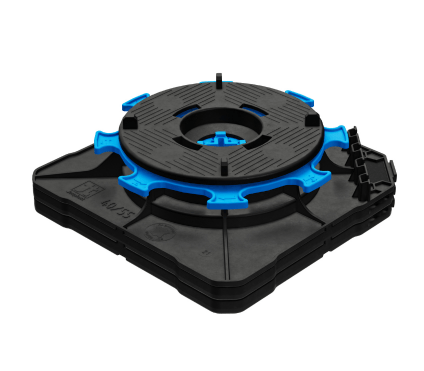

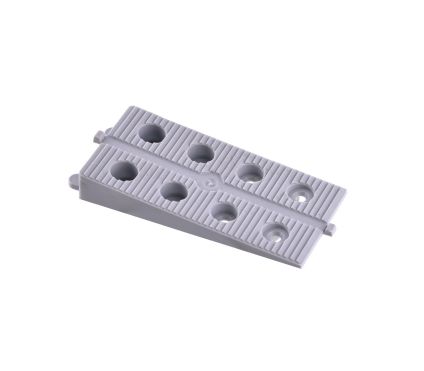
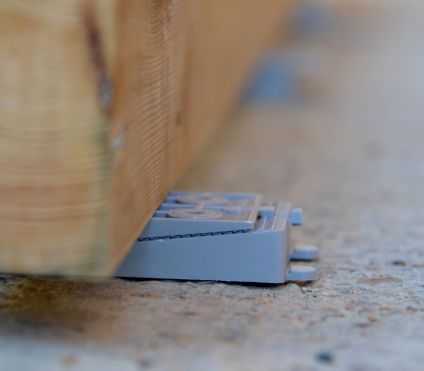


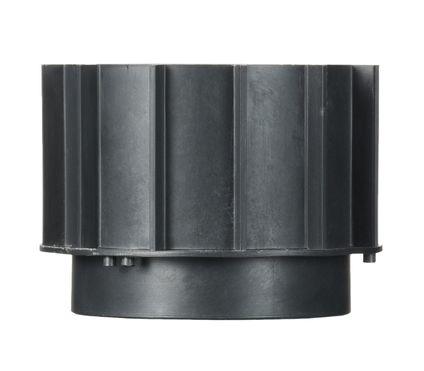
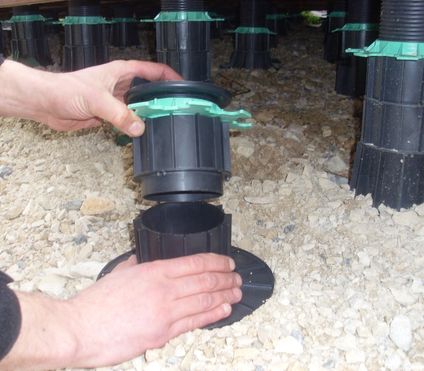
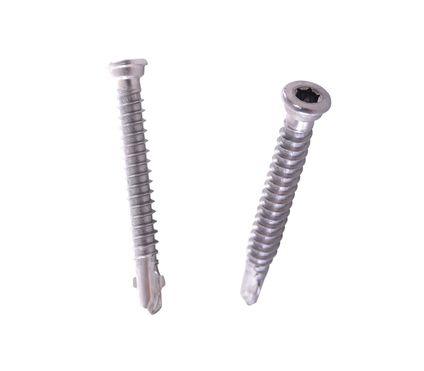

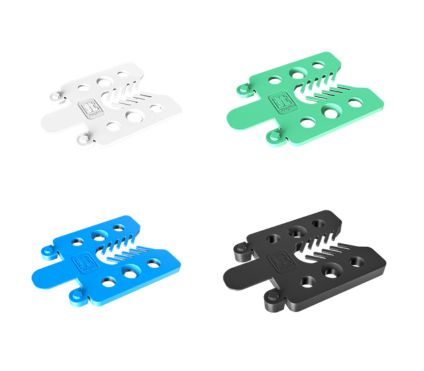
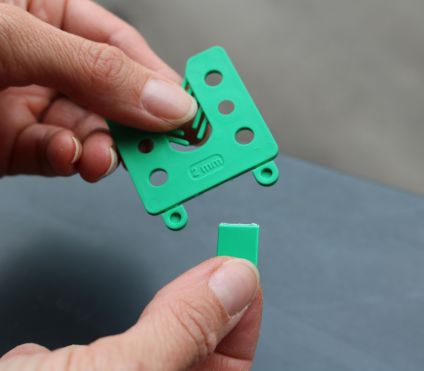


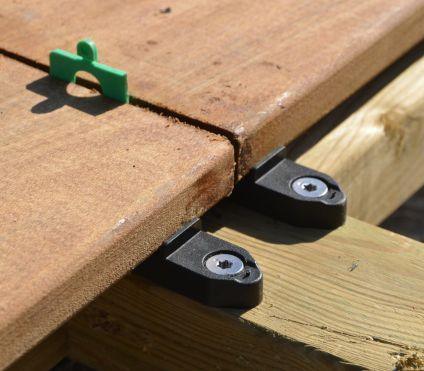




Strong and built to last, Jouplast® deck pedestals are a reliable and durable technical solution to support the substructure of your wooden or composite decking.
Adjustable from 8 to 470 mm (with spacers), this plastic decking pedestal is ideal for flat, even surfaces. Its head features one or two support tabs (depending on the pack) which allow the joists to be securely fixed and ensure the stability of your raised timber decking installation. This pedestal is ideal for renovation projects or for building natural timber or composite decking.
The Easio® pedestal is specifically designed for sloping or uneven ground. Available in several sizes, with an adjustable height ranging from 40 mm to 230 mm, it can compensate for up to a 5% gradient thanks to its diamond-shaped self-levelling head. This also facilitates double joist installation with a single row of pedestals and helps secure the frame. It features two centring tabs, allowing for a fast and precise positioning of the joists. It can be adjusted manually or using the EASIO® / CLEMAN® driver bit and can be combined with an EASIO® edge finishing piece to lock the self-levelling system in place. Finally, this pedestal is compatible with the 60 mm CLEMAN® / EASIO® extension (maximum of 4).
The Elevo® joist support pedestal revolutionises decking installation by eliminating the need for ground preparation stage. It attaches directly to metal posts driven into the ground or lawn, without the need for excavation. Once the posts are in place, simply install the decking joist pedestals, position the joists, then lay the decking boards. It is adjustable from 43 to 118 mm.
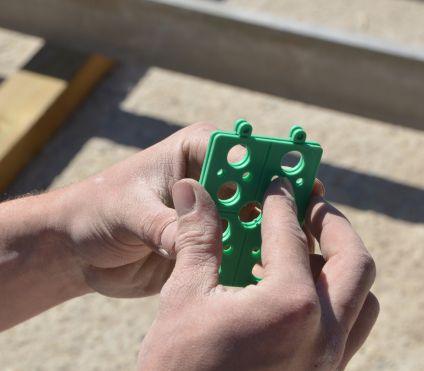
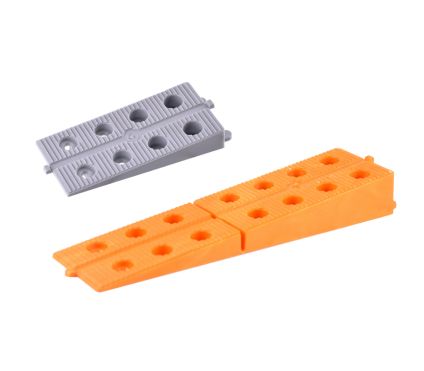
Please note that Jouplast® decking pedestals are compatible with a wide range of accessories that allow you to adapt your structure to any configuration: flat shims or ridged wedges for levelling, bituminous or non-bituminous protection strips, risers, joist support slope correctors, or even edge finishing products for a neat finish. Every detail has been designed for easy installation whilst ensuring the longevity of your raised decking.
Here are a few questions to ask yourself to help you choose the right pedestals to create your timber deck:
First and foremost, you should measure the required height for your project. Jouplast® adjustable pedestals for decking cover a wide range of heights, from 8 mm to over 470 mm with risers. Note that to elevate your decking, you may need different pedestal heights depending on the ground slope or site conditions. It is therefore common to combine several models to suit all areas of the project.
The nature of the ground plays a decisive role in choosing a deck pedestal. If you are building your raised timber decking on a concrete slab or a stabilised, levelled surface, standard pedestals are perfectly suitable. However, for uneven or slightly sloping ground, EASIO® self-levelling pedestals are the preferred option. Jouplast provides solutions tailored to these different types of ground.
Also consider the accessories that will help you refine your work (spacers, isolation pads, shims, etc.) and finish the edges of your decking area.
Your joist pedestals must be installed on a prepared, untreated ground surface or a concrete slab. We strongly advise against installing them directly on soil without stabilisation, due to the risk of settlement or ground movement caused by weather conditions (rain, drought) or the weight of the structure. Whether you are installing your pedestals on an unfinished ground surface or a concrete slab, the surface must be clean, stable and properly levelled to ensure a durable and secure decking.
Each pedestal type has its own specific installation method. To ensure you follow the correct installation steps, we recommend you read the installation guide for the pedestals you have chosen for your project.
However, we can summarise the installation of decking pedestals in a few simple steps:
For detailed and specific instructions, we recommend consulting the installation guides provided on the product page of the pedestal you are using. They contain precise information and illustrations to guide you step by step.
The spacing between the pedestals will depend on the type of wood and the cross-section of the joists you are using. As a general rule, we recommend a distance of 70 cm between each adjustable pedestal. For joists, we recommend a centre-to-centre distance of 50 cm if your decking is made of natural wood boards. Please note that these guidelines differ for a composite decking.
Here are the steps to follow to estimate the number of pedestals you will need to build your wooden or composite decking.
First, measure the area of your decking and draw up your installation plan, considering the recommended spacing for your flooring material.
To know the recommended spacing between each pedestal, please refer to the relevant installation guide, available on the product page for the decking pedestal you are using, and the advice from your wood manufacturer.
To calculate the number of pedestals:
For further details, please refer to our practical guide to calculating decking pedestals.
Jouplast® decking joist pedestals have a crush test resistance of over 1 tonne. However, the weight that a raised decking can support depends not only on the strength of the pedestals and whether they have a high load resistance, but also on the type of wood used for the decking. We therefore advise you to consult your timber supplier for more precise information on this matter.
More generally, if you are planning to place a heavy item on your raised decking, such as a hot tub for example, we recommend our PROFILDECK® solution (aluminium joists), which will allow for better weight distribution across the subframe structure of the installation.
Jouplast adjustable decking pedestals are durable and come with a 10-year warranty, subject to our terms and conditions of sale and in accordance with our directions for use. They are UV-resistant and frost-resistant and have a weight tolerance of up to 1 tonne per pedestal. This makes them a robust and stable support.


of existence at your service

to bad weather

and environmentally friendly

thanks to our innovative systems

Jouplast® guides you in your outdoor development project (terrace, staircase, driveway) by establishing a complete shopping list in 5 minutes.
Also benefit from expert advice to install your project with complete peace of mind.
You will find here all our directions for use.
Find the point of sale closest to you using our dealer map. We remind you that no products are sold directly. Please contact one of our distributors if you wish to receive a quote or make a purchase.
Our products are installed by numerous landscapers or public works companies. We encourage you to contact one of these professionals for the installation of Jouplast® products.
If you need assistance or information, you can reach out to your distributor.
Thank you!
To find the price of your Jouplast® product, we invite you to contact your nearest distributor.
We do not sell directly to individuals or professionals.
To find a price, we recommend contacting your usual distributor.
If your product is defective, we invite you to contact your distributor.
If the response from your distributor is not satisfactory, please feel free to write to us using the contact form.
In the case of receiving slightly deformed or warped pads, we assure you that they remain suitable for installation. Once the covering is installed, the pad will return to its original shape.


