Documentation
 Terrace configurator
 E-catalog
 Stores
 Contact



See the variations
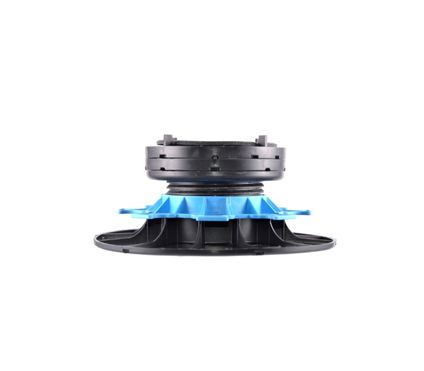
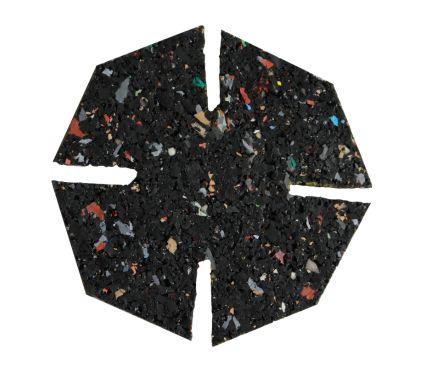
Acoustic Rubber Cushion for Essential Paving Riser Pedestal

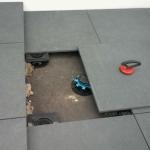


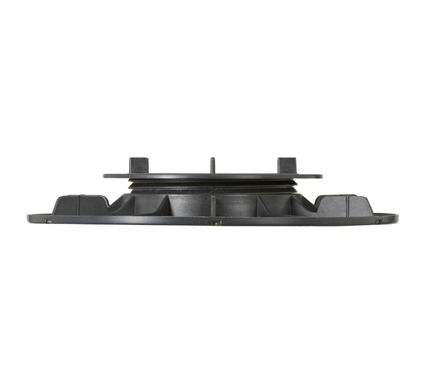


4 snappable 3 mm spacers for a smooth surface.

Optimised flange shape for easier fitment against a wall or internal corner.

Millimetre-accurate manual height adjustment using the screw adjuster: no other tools are required.

Reinforced for greater compressive strength.
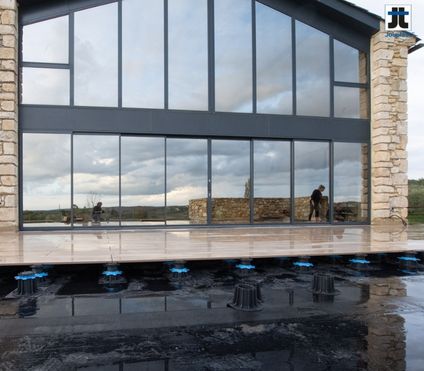
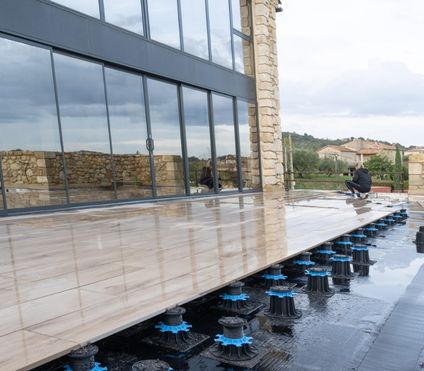
This riser pedestal is adjustable for heights of between 20 and 30 mm, and designed for tiled, ceramic or slab terraces intended for pedestrian use. Located beneath tile corners at each intersection, it allows air to circulate freely, prevents rising damp and leaves space for cable and pipe runs. By removing the need for arduous earthmoving and joints, it makes the whole process of terrace and patio construction easier. Manual height adjustment.
 compliant with DTU french standards
 FDES
FDES
 Information sorting
 Iso9001
 Iso14001
 Recycled material.
 label MORE.
 Millimetre-accurate manual height adjustment using the screw adjuster: no other tools are required.
 Complies with French technical standard DTU 43.1.
 Quick and easy to install.

All riser pedestals for paving must be installed on stabilised ground or a precast concrete slab.
Given its low height, the following Jouplast® accessories cannot be used to finish the terrace edges: the paved side finishing plate and paved terrace side cladding support. See installation instructions.
At least one riser pedestal should be positioned at each corner of the paving slab.
Please refer to the paving/ceramic tile manufacturer’s recommendations to decide whether or not additional riser pedestals may be required.
The paving used must be self-supporting and compliant with French classification T7, T11 or F+.
Stone, Concrete or Ceramic Slabs: Which Material Should You Choose for a Decking Pedestal Terrace?
Stone, concrete or ceramic slabs are all suitable options for a terrace installed on pedestals. The choice will depend on the intended use, the installation method, and of course the aesthetic appearance you want to achieve for your slab terrace.
Stone Slabs: A Durable and Robust Material :
Stone is appreciated for its authenticity and timeless appearance. Depending on the manufacturing process, two types of stone slabs can be produced:
Natural stone slabs, created by cutting directly from the parent rock according to predefined dimensions.
Reconstituted stone slabs, produced by crushing the mineral material and combining it with other materials and treatments before molding.
Whether natural or reconstituted, stone slabs fit seamlessly into all decorative styles and suit virtually every installation method.
Like concrete slabs, they can be installed using bonded, adhered, pedestal-supported, or sand-bed installation techniques.
Porcelain Stoneware Slabs: Similar to Outdoor Tiles :
Ceramic slabs are manufactured from porcelain stoneware. This material is also used to produce outdoor tiles of the same name. For this reason, porcelain stoneware slabs are often classified as a separate category while remaining closely associated with outdoor tiling products.
Outdoor porcelain stoneware slabs are a premium choice for creating a slab terrace. Ceramic paving is particularly valued for its excellent aesthetic appeal. Their refined appearance brings elegance to outdoor spaces in general and terraces in particular.
In terms of installation, porcelain stoneware supports all common installation methods, including pedestal installation. This is possible despite its reduced thickness compared with other paving materials. For installation on pedestals, the slab must have a minimum thickness of 20 mm (2 cm) and comply with the QB UPEC F+ standard.
Wooden Deck Tiles: Ideal for Smaller Areas :
Also known as deck tiles, wooden slabs are often associated with decking boards. This is because they are made from a bio-based material. However, some deck tiles are manufactured from composite materials, combining wood fibers with synthetic materials.
Wooden deck tiles are also very lightweight. Their installation method differs significantly from that of other slab types and is particularly simple, as they are generally designed to be laid directly on the ground, provided the surface is smooth and level.
It is also worth noting that wooden deck tiles can be installed on joists.
The surface on which the paved patio will be built must be prepared before work can begin. Unprepared ground (e.g. unprepared soil) may change over time and can be subject to movement. Depending on the weight it will subjected to and the local climate (dry periods, heavy rainfall, etc.). For these reasons, it is important to stabilise the ground beneath the patio to ensure long-term stability of your project.


of existence at your service

to bad weather

and environmentally friendly

thanks to our innovative systems

Jouplast® guides you in your outdoor development project (terrace, staircase, driveway) by establishing a complete shopping list in 5 minutes.
Also benefit from expert advice to install your project with complete peace of mind.
You will find here all our directions for use.
Find the point of sale closest to you using our dealer map. We remind you that no products are sold directly. Please contact one of our distributors if you wish to receive a quote or make a purchase.
Our products are installed by numerous landscapers or public works companies. We encourage you to contact one of these professionals for the installation of Jouplast® products.
If you need assistance or information, you can reach out to your distributor.
Thank you!
To find the price of your Jouplast® product, we invite you to contact your nearest distributor.
We do not sell directly to individuals or professionals.
To find a price, we recommend contacting your usual distributor.
If your product is defective, we invite you to contact your distributor.
If the response from your distributor is not satisfactory, please feel free to write to us using the contact form.
In the case of receiving slightly deformed or warped pads, we assure you that they remain suitable for installation. Once the covering is installed, the pad will return to its original shape.