 Documentation
 Terrace configurator
 E-catalog
 Stores
 Contact


See the variations
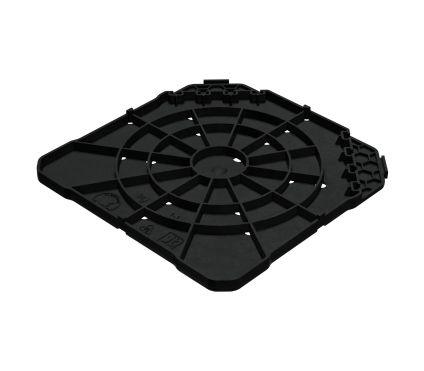
Decking Riser Pedestal (1 Lug) “Essential Range”

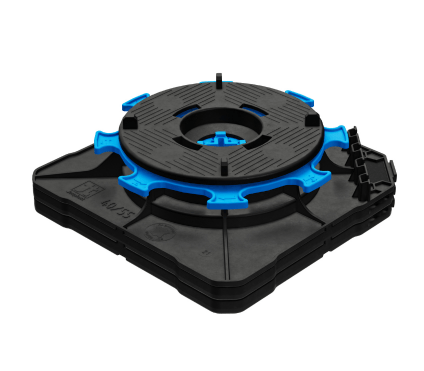
Our standard and Elevo® pedestals for composite decking are easy-to-use, cost-effective and ensure an attractive and natural finish. For a durable and long-lasting raised composite decking, the decking joists should never be laid directly on the subbase. For proper ventilation, they should be laid directly on pedestals or slab spacers. Jouplast® offers a broad selection of adjustable pedestals for elevated composite decks, as well as accessories to extend the lifespan of your raised deck. Use our decking cover tapes to protect your composite wood decking from moisture. In addition, discover our Profildeck® aluminium joists, which will enable you to create high-quality composite decking patio or composite terrace with composite boards.
Read more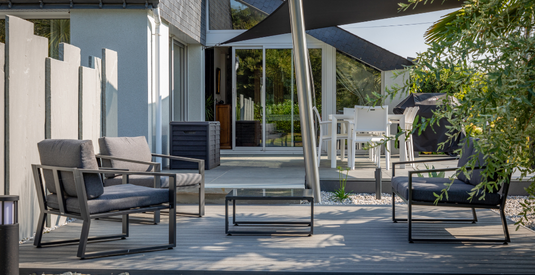
8 results






Composite material is made from wood fibres and a plastic matrix. It is resistant to water, UV rays, wear and tear, and is easily maintained. Furthermore, composite flooring keeps its aesthetic appeal over time and is not prone to discolouration or cracking.
To successfully build a raised deck with composite cladding, it is essential to choose it carefully and install it properly. The various types of composites offer numerous elegant and modern options. Composite decking boards mimic the look of wood, without the maintenance hassles. This material comes in a wide range of colours and can replicate a variety of wood species. Its colour may lighten over time.
Composite materials are naturally anti-slip, which can be a real advantage, especially around a swimming pool or in wet weather. There is no risk of splinters, unlike with timber decking.
Composite boards are often produced from recycled materials, making them an eco-friendly choice.
The size of your composite wood patio will determine how many boards you will need. It is important to have extra boards to cover cuts and offcuts (10% on average).
Ideally, the ground for your raised composite decking should be levelled and stable. If the ground is uneven, you will need to level it or use self-levelling pedestals, pedestal extensions or Essentiel® slope correctors. Ground preparation should be done before the installation of your elevated composite deck. We then recommend laying a geotextile to ensure good drainage.
Watch our video on ground preparation to learn how to prepare the ground of your raised patio step by step.
The joist support structure for your elevated composite patio must be strong and durable. It must be able to support the weight of the composite boards and the people who will be using the composite deck. Jouplast® offers Profildeck aluminium joists, a lightweight, strong and perfectly suited solution to build a raised decking, compatible with our pedestals for timber and composite decking.
The decking boards must be laid as per the composite manufacturer’s recommendations. It is important to leave an expansion gap between the boards to allow the wood to expand and contract.
Once the boards are installed, do not overlook the edge finish of your composite decking terrace. This will protect the edges of the deck and give it a stylish, finished look. At Jouplast®, we offer various side finishing products for an attractive finishing touch.
Composite decking does not require any special maintenance. Simply clean it regularly with a brush, soap and water.
You can use household cleaning products on composite decking, but we recommend avoiding overly abrasive products to preserve its smooth, non-rough wood-effect finish.
We advise you to wash the deck’s surface regularly to prevent dirt from building up.
Avoid using a high-pressure cleaner, which could damage the appearance of the decking.
The price per square metre of an elevated composite patio can vary depending on two factors:
If you do not have the means or the skills to do this yourself, you can also ask a landscaper to take care of your composite decking project. You should expect to pay between £20 and £50 per square metre for a professional to install your raised patio.
This installation method will not cause any issues, as the pedestals are easy to adjust. You must first prepare the ground to ensure the surface is levelled. Our range includes spacers to compensate for any differences in ground level. Each manufacturer provides their own fixing clips to fix the composite decking boards.
To successfully build a raised deck with composite cladding, it is essential to choose it carefully and install it properly. The various types of composites offer numerous elegant and modern options. Composite decking boards mimic the look of wood, without the maintenance hassles.
There are several manufacturing methods for composite decking boards:
Composite decking boards can be made from different components:
Finally, composite decking boards can have several types of finishes:
A raised composite decking patio can support up to 1 tonne per pedestal, which means that you can confidently furnish your outdoor living area even with heavy furniture, barbecues or griddles. The raised decking system is renowned for being highly weather- and frost-resistant, ensuring the longevity of your outdoor space.
Jouplast decking pedestals come with a 10-year guarantee, subject to our installation guidelines and terms and conditions of sale.
Composite boards have an average lifespan of 20 to 30 years, though this will depend on the environmental quality of the materials. Solid boards are more robust and durable than hollow boards. Gentle, regular cleaning will help extend the lifespan of your decking. The UV protection on the boards is also important for withstanding high temperatures.
Composite patios tend to age well when the raw material is of high-quality and the deck is well maintained. Pay extra attention to the resistance of the composite boards and the installation system to UV and frost.
By installing composite boards on our Profildeck aluminium joist system, the installation is rot-proof and highly durable over time, even in saline environments such as coastal areas.
Composite decking heats up in the sun, just like any other surface material such as timber or tiles. Composite wood patios can reach higher surface temperatures in the sun than the ambient temperature.
We recommend choosing light-coloured composite boards, which absorb less heat than dark-coloured ones. This also applies to tiles or porcelain tiles.
Although composite heats up when exposed to the sun, it also cools down more quickly than other surfaces such as tiles or wood, which retain heat.
We also recommend having shaded areas on your patio using nearby vegetation or shading equipment such as parasols or stretched canvases. Around a swimming pool, we also advise you to step carefully to avoid burns when the weather is hot.
No, composite has several properties that make it resistant to rot. The mixture of wood fibre and plastic makes the material rot-proof and therefore resistant to weathering and insect infestation.
No, a composite decking installed on pedestals is not supposed to warp. The quality of the materials is, of course, paramount. Poor-quality products may expand under the effect of heat and contract under the effect of frost. Installation is extremely important and must be carried out properly. The boards must be secured correctly using the manufacturer’s fixing clips and spaced sufficiently apart to ensure the decking is ventilated.
A raised composite wood patio has many advantages, but there are also some disadvantages to consider.
Composite decking on pedestals can be more expensive than a natural wood decking. It is easy to find good-quality, low-cost timber. As composite is a process that combines two materials, this is less often the case.
Composite, and particularly smooth boards, can be prone to scratches and may require regular cleaning to prevent unwanted stains.


of existence at your service

to bad weather

and environmentally friendly

thanks to our innovative systems

Jouplast® guides you in your outdoor development project (terrace, staircase, driveway) by establishing a complete shopping list in 5 minutes.
Also benefit from expert advice to install your project with complete peace of mind.
You will find here all our directions for use.
Find the point of sale closest to you using our dealer map. We remind you that no products are sold directly. Please contact one of our distributors if you wish to receive a quote or make a purchase.
Our products are installed by numerous landscapers or public works companies. We encourage you to contact one of these professionals for the installation of Jouplast® products.
If you need assistance or information, you can reach out to your distributor.
Thank you!
To find the price of your Jouplast® product, we invite you to contact your nearest distributor.
We do not sell directly to individuals or professionals.
To find a price, we recommend contacting your usual distributor.
If your product is defective, we invite you to contact your distributor.
If the response from your distributor is not satisfactory, please feel free to write to us using the contact form.
In the case of receiving slightly deformed or warped pads, we assure you that they remain suitable for installation. Once the covering is installed, the pad will return to its original shape.


